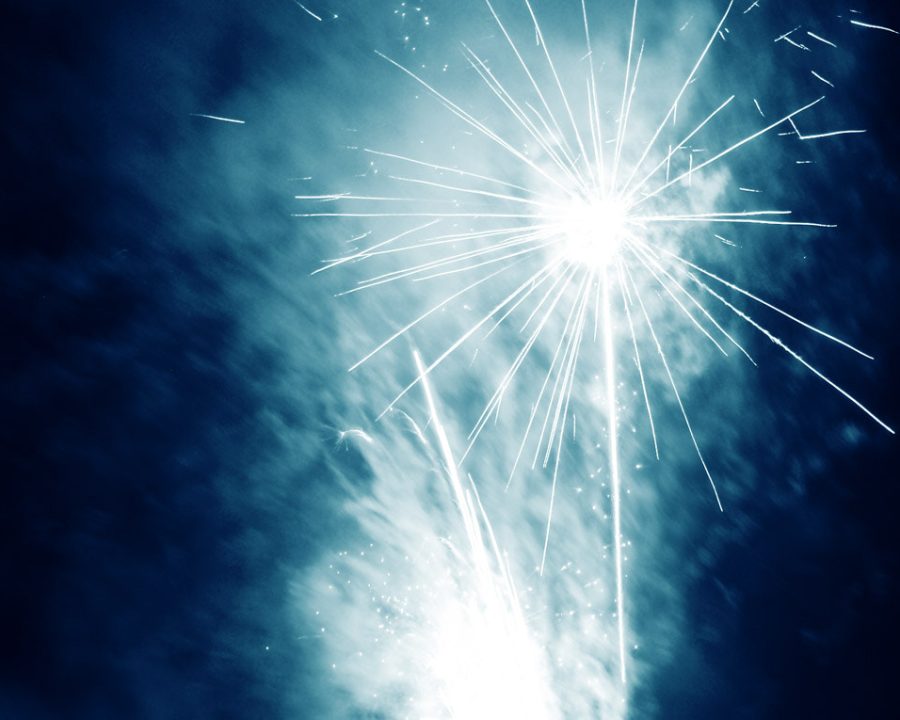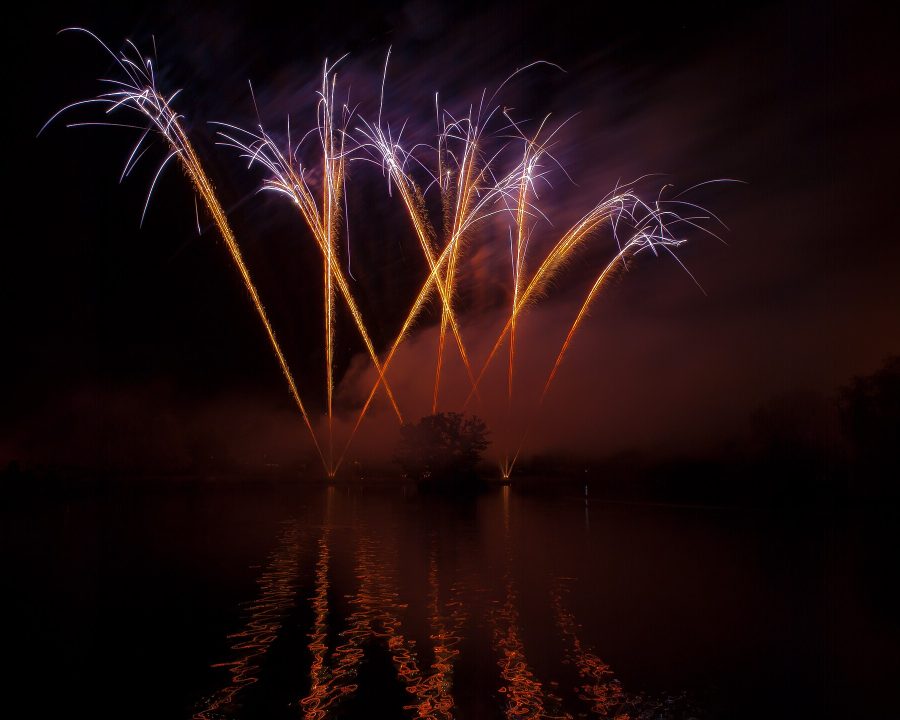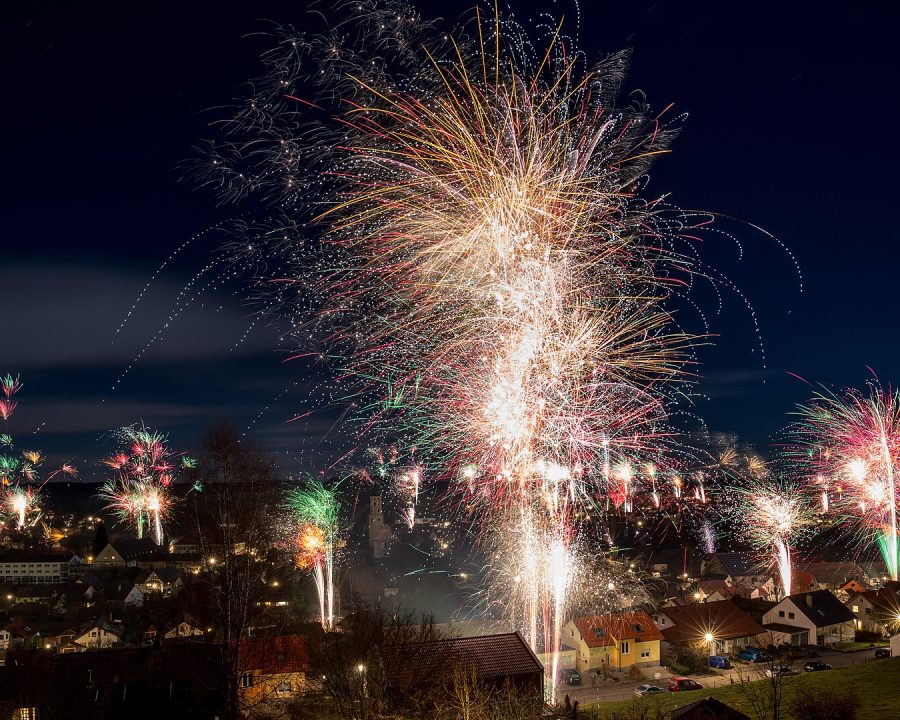
Bloom designs choreographed pyrotechnic displays — timing, shell selection, and burst pattern mapped to music and site geometry before a single fuse is lit.
Bloom started in 2014 with two people scoring shell timing against music on graph paper, because the software available at the time couldn't model burst height accurately enough for tight venues.
We still score every display by hand before it goes into simulation software — the geometry of a site matters more than any template, and a template-first process shows in the finished display.
Every display goes through the same five stages before a single shell is loaded.
Wind patterns, fallout radius, spectator sightlines, and any overhead obstruction get mapped in person before any shell selection happens. A site survey can rule out an entire class of effect before design even starts.
If the display is choreographed to music, timing is scored against the actual track on paper first — burst height and duration have to match the beat, not just look good in isolation.
A shell that reads beautifully over open water can wash out completely against a lit stadium backdrop. Selection is driven by the survey data, not by which effects are newest.
The paper score goes into simulation software for a full timing and trajectory pass — this is where most last-minute changes happen, on screen, before any physical setup begins.
Every display is electrically fired with a redundant control system and a licensed crew on site — no hand-lit fuses on any show we run, regardless of scale.
Every display carries the same licensed firing crew lead and safety sign-off, regardless of scale.
We book venues and dates up to a year out — earlier for anything requiring a custom shell order or a complex site survey.